Shonto Gallery
Circa 2006-2009
Shonto Gallery was the website for the Flagstaff gallery of Shonto Begay, a Dine’ artist. Shonto Begay’s work is found in more than fifty galleries and museums, including the American Contemporary Arts Museum in San Francisco, the Wheelwright Museum of the American Indian in Santa Fe, the Phoenix Art Museum and the Museum of Northern Arizona in Flagstaff.
Content is from the site's archived pages from 2006-2009, as well as from other outside sources.
For the most up to date info about Shonto Begay go to his facebook page at: https://www.facebook.com/shonto.begay.63/
His work is sold at the West of the Moon gallery in Flagstaff, AZ. or online at the MedicineManGallery.com or at their gallery in Tucson AZ.
2020 Legacy Recipient : Shonto Begay
flagartscouncil.org/

Shonto Begay in his studio and the street below, Photo by Dawn Kish

The Flagstaff Arts Council Board of Directors selected Shonto Begay as a 2020 Viola Legacy Award recipient for his lifelong contribution to the arts. In selecting Begay, the board cited Begay’s generosity, national reputation, and his unwavering support of his community.
Born in a Hogan and raised on Dineh’ land, known as the Navajo Nation, Shonto Begay began professionally writing, illustrating and painting in 1983. His work captures the striking beauties of a traditional Navajo upbringing and the harsh realities of modern reservation life.
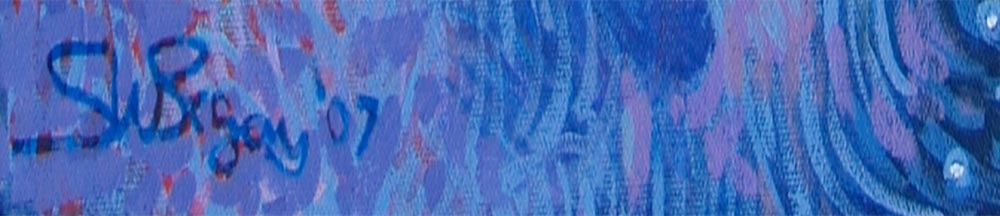
Represented in galleries and museums worldwide, he was one of 16 children. His mother is a traditional Navajo rug weaver from the Bitter Water Clan and his father was a medicine man born to the Salt Clan. Shonto grew up herding sheep in Kletha Valley, located in Shonto, Arizona. His acrylic paintings are done in a series of small brush strokes that repeat like the words of a traditional Navajo blessing prayer. Images harken heartfelt childhood memories and resonate the constant struggle for balance and harmony with humankind and the Earth.
Shonto’s traditional life of sustainability and prayer helped him endure the brutality of the U.S. government boarding school he was forced to attend as a child away from the loving family sheep camp he was asked to forget. Shonto speaks to audiences of all ages about inspiration and the importance of education and embracing cultural backgrounds. He is made his film debut as the character Cowboy in the Native-produced Monster Slayer Project–a movie about the Hero Twins, key characters in the Dineh’s origin story. A true storyteller, Shonto written and illustrated several books for Scholastic publishers and others.
Shonto’s art has been exhibited in solo shows at the Museum of Northern Arizona, Arizona State Museum, Utah Museum of Fine Arts, The Wheelwright Museum of the American Indian in Santa Fe, the American Indian Contemporary Arts Museum in San Francisco and Phoenix Art Museum. Shonto attended Bureau of Indian Affairs boarding schools all over the Navajo
Reservation and high school in Kayenta. He received an Associates of Fine Art degree at the Institute of American Indian Arts in Santa Fe, and a Bachelor of Fine Arts degree from California College of Arts and Crafts. He worked a decade in the 1980s as a National Park Service ranger at Grand Teton National Park in Wyoming and Navajo National Monument in Arizona. In 2017, became an Artist in Residence for the Honors Program at Northern Arizona University, where he teaches culture and painting while camping with students on the reservation.
~~~~~
NB: I had seen Shonto Begay's work at the online website of Medicine Man Gallery a while back. I particularly liked his work of landscapes and wild life that I saw online, but really wanted to see his work up close in person. So I decided to plan a road trip that would take me from San Diego through southern Arizona to Tucson into New Mexico, heading north when I reached Las Cruces to Albuquerque and then head west back to California before heading home to San Diego. I planned on hitting as many galleries as possible along the way during these four week drive. I plan on bringing my dog along. Jaks is a Clumber Spaniel. Unlike most spaniels, this breed is a total couch potato, and loves nothing more than curling up on a comfortable bed for the comfortable dog. Typically Jaks will be happy to chill on just about anything, but I plan to bring his favorite dog bed with me on the trip. His bed actually looks like a large round floor pillow which many of my friends have sat down on when they visit thinking it's just that. Fortunately Jaks is so chill he doesn't mind. My first stop in Tucson will be the Medicine Man Gallery. I am really excited to see Shonto Begay's work. Will update later the results of my adventure.
~~~~~
A NOSTALGIC LOOK BACK
NOTE: Shonto’s downtown Flagstaff gallery on Aspen Ave. above Downtown Diner has been closed for a number of years.
Paintings that fit your budget and into your backpack

Shonto's Current Events :
Navajo Festival of Arts and Culture
June 29th - 30th 2006
Museum of Northern Az
Flagstaff, Az
~~~
Turquoise Tortoise Gallery
August 4th 2006
First Friday Art Talk
Hozho Center - 431 Hwy 179
Sedona, Arizona 86336
www.turqtortsedona.com
928-282-2262
~~~
Petrified National Forest
September 9th - 16th 2006
Artist in residence.
Northeastern Arizona
~~~
Brandy's Restaurant & Bakery
Art on display
September 4th - October 16th
Art Talk & Party on
September 25th ,2006 5:30 - 8pm
www.brandysrestaurant.com
Take a trip Along the Navajo Trail to Shonto Begay’s 8th annual art show at Brandy’s Restaurant & Bakery this September. Begay, an award-winning Navajo painter, illustrator and writer, shares acrylic on canvas works inspired by his journeys.
“I share visions of my road thus far,” Shonto says. “I offer you the colors, movement and composition of the beautiful land that forges my spirit. These are my journeys through the potholes and avenues of life’s tests and blessings and the sacred land I call my home.”
Shonto, whose paintings are represented at the Turquoise Tortoise Gallery in Sedona and the Medicine Man Gallery in Tucson, says he’s proud of being a part of Brandy’s art show tradition. “I applaud Brandy’s for being one of the first alternative places to see art in Flagstaff,” he says.
Shonto Begay - Diné artist
Maternal Clan: Bitter Water Paternal Clan: Salt Clan
In Navajo, the word Shonto refers to light reflecting off water. A similar glint is in Shonto Begay’s eyes when his paintbrush meets canvas. Shonto’s writings and paintings capture a moment of Diné, the people.
Born on a Navajo reservation sheep camp to a weaver of Tonalea storm patterns and a respected medicine man, as a boy Shonto was removed from his hogan home and forced to attend a government boarding school away from his family and culture. Now he reclaims his identity through his art, balancing the harsh realities of reservation life with the amazing beauty found among its canyons and mesas. “I am very mindful that painting has saved my life many times over,” says Shonto. “It is how I’ve been able to dilute and even heal my own personal tragedies.”
Shonto’s images include truck beds full of families, hitchhikers and mesas that seem to go on forever. From first light upon the red earth to images of Manhattan, his impressionistic brushstrokes depict moments in time that pay homage to his memories or state his concerns about the environment and encroaching development.
Shonto is a volunteer with Grand Canyon Chapter of the Sierra Club, Black Mesa Trust and the Save the Peaks efforts. For more information about Native people, land and resources, visit :www.nativemovement.org www.swfa.org www.blackmesawatercoalition.org and www.blackfire.net

“From Beneath The Blanket” acrylic on canvas, 2005
Shonto's multi-award winning work has been featured at the Museum of Northern Arizona, Heard Museum in Phoenix, The Smithsonian Institute, the American Indian Contemporary Arts Museum in San Francisco, Arizona State Museum the American Indian Community House Gallery in New York City. His mural work and pen and ink drawings of the Navajo Legend of the Hero Twins are on display at the Wheelwright Museum of the American Indian in Santa Fe.

"Flagstaff Bound," acrylic on canvas, 2003
2009
Southwest Indian Art Fair
Saturday and Sunday, Feb. 21 and 22, 2009
Arizona State Museum, University of Arizona campus in Tucson
51st Annual Heard Museum Guild Indian Fair & Market
Saturday and Sunday, March 7 and 8, 2009
9:30 a.m. to 5 p.m.
2301 N. Central Ave. Phoenix, AZ 85004
First Friday Art Walk
April 3, 2009
Shonto is featured in the Arizona State Museum’s collection, “Connections Across Generations:
The Avery Collection of American Indian Paintings” at the University of Arizona.

“Reclaimed by Silence” acrylic on canvas
Shonto's multi-award winning work has been featured at the Museum of Northern Arizona, Heard Museum in Phoenix, The Smithsonian Institute, the American Indian Contemporary Arts Museum in San Francisco, Arizona State Museum the American Indian Community House Gallery in New York City. His mural work and pen and ink drawings of the Navajo Legend of the Hero Twins are on display at the Wheelwright Museum of the American Indian in Santa Fe.
More Background On ShontoGallery.com
ShontoGallery.com stands as the online remnant of a once-vibrant Flagstaff art gallery that celebrated the work of Diné (Navajo) artist Shonto Begay. Though the physical gallery closed its doors years ago, the website continues to exist in archived form, preserving a snapshot of Begay’s prolific mid-2000s period. During its active years, the gallery was a cornerstone of downtown Flagstaff’s creative scene, offering a dedicated physical space in which visitors could engage with Begay’s intensely personal, culturally grounded, and visually striking paintings. The website, meanwhile, served as a central hub for documenting exhibitions, sharing biographical details, providing artistic insights, and inviting community members to participate in events, art walks, and cultural conversations.
From 2006 to 2009, the most active years recorded on ShontoGallery.com, the site chronicled a dynamic roster of shows at regional galleries, festival appearances, museum exhibitions, residencies, and collaborative events. It captured a period in which Begay was not only producing significant bodies of work but also gaining increasing recognition across the Southwest and beyond. Today, the website’s archived pages offer a time capsule reflecting both the artistic energy of the Flagstaff community and the emerging national profile of one of the most respected Native American artists of his generation.
This article provides an in-depth examination of ShontoGallery.com and its historical, cultural, artistic, and social significance. It explores the origins of the gallery, the life and work of Shonto Begay, the exhibitions documented on the site, the impact on the community, and the enduring relevance of this online archive.
The Origins of ShontoGallery.com
ShontoGallery.com was created as the digital home for the physical Shonto Gallery, a second-floor studio located on Aspen Avenue in downtown Flagstaff, Arizona. The gallery sat above the well-known Downtown Diner and was surrounded by Flagstaff’s lively cultural district. Its physical setting was steeped in the charm of old brick architecture, wooden floors, and tall windows overlooking a main street full of locals, hikers, college students, and travelers exploring Route 66.
The website provided a simple but effective platform for:
-
Announcing upcoming exhibitions
-
Sharing artist statements
-
Displaying sample artworks
-
Listing festival appearances
-
Highlighting community involvement
-
Preserving archival event flyers and show details
-
Providing background on the artist’s life and philosophy
At a time when digital presence for individual artists and small galleries was far less common than today, ShontoGallery.com served as a pioneering tool for documenting Native art online. Though modest in design, it fulfilled multiple functions: an event board, a biography hub, an educational reference, and an extension of the gallery’s welcoming environment.
The website reflected Begay’s personality—warm, authentic, culturally rooted, and driven by a deep desire to share stories. Although no longer updated, the archive remains invaluable for understanding the evolution of his career during the Flagstaff gallery period.
A Creative Snapshot: The Gallery’s Active Years
Between 2006 and 2009, ShontoGallery.com chronicled events that showcased the breadth of Begay’s artistic influence across the Southwest. During these years, the gallery served as a focal point for:
-
Monthly downtown art walks
-
Annual rotating exhibitions
-
Collaborative shows with regional galleries
-
Artist talks featuring storytelling and discussions
-
Community gatherings celebrating Navajo culture
-
Museum-level exhibitions that brought national attention
The site documented a wide range of milestones that reflect Begay’s commitment to both art and community. Some notable highlights include:
Major Solo and Group Exhibitions
Begay held solo shows at the Museum of Northern Arizona, the Arizona State Museum, and university galleries. These exhibitions positioned him not only as a regional artist but as a significant contributor to modern Native American fine art.
Recurring Brandy’s Restaurant & Bakery Shows
Begay’s annual shows at Brandy’s became a beloved community tradition. These exhibits blended fine art with everyday life, drawing audiences who might not typically visit traditional galleries. The website often promoted these shows as accessible and intimate opportunities to experience his newest paintings.
Artist-in-Residence Programs
In 2006, Begay completed a week-long residency at Petrified Forest National Park, where he worked on-site capturing the colors, textures, and geological drama of the prehistoric landscape. The website documented this experience with photographs and event announcements.
Festival Participation
ShontoGallery.com listed several appearances at the Navajo Festival of Arts and Culture in Flagstaff, the Heard Museum’s Indian Fair & Market, and other Indigenous-centric events. These festivals allowed Begay to present his work within culturally grounded, community-oriented contexts.
Through these listings, the website became a reliable source of up-to-date information for collectors, scholars, and fans tracking Begay’s career.
About the Artist: Shonto Begay’s Life and Influence
Shonto Begay was born on Navajo land in the high desert of northern Arizona, in a region known for vast open spaces, sandstone formations, and deep cultural roots. He grew up in a traditional hogan, one of sixteen children, surrounded by the weaving patterns of his mother and the ceremonial teachings of his father, a respected medicine man.
His upbringing combined:
-
Rug weaving traditions
-
Herding sheep
-
Navajo oral storytelling
-
Spiritual teachings
-
The rhythms of reservation life
These early experiences became the foundation of his artistic worldview.
Education and Early Challenges
Begay, like many Navajo children of his generation, was forcibly removed from his home and placed in Bureau of Indian Affairs boarding schools. The trauma of cultural suppression—being forbidden from speaking his language or practicing traditional customs—imprinted deeply upon him and later became a thematic cornerstone of his paintings and writings.
After surviving these experiences, he pursued art education at:
-
The Institute of American Indian Arts in Santa Fe
-
The California College of Arts and Crafts
These institutions allowed him to refine his techniques while remaining spiritually connected to his cultural roots.
Professional Beginning
Before becoming a full-time artist, Begay spent nearly ten years as a National Park Service ranger. His time along desert plateaus, mountain ranges, and canyon systems further informed his understanding of landscape, perspective, and light—elements that became essential in his later paintings.
Artistic Style and Thematic Significance
Shonto Begay’s signature style is defined by dense, rhythmic brush strokes. Each line contributes to a shimmering, almost vibrating surface that draws viewers into a world where memory, spirituality, and lived experience intertwine. His works often operate at the intersection of realism and dreamlike symbolism.
Common themes include:
-
Daily life on the Navajo Nation
-
Scenes of hitchhikers along desert highways
-
Sheep herds against vast mesas
-
Pickup trucks filled with family members
-
Traditional ceremonies
-
Environmental concerns
-
Urban and rural contrasts
-
Healing from boarding school trauma
Begay often describes his style as a visual version of the Navajo prayer tradition—repetition, rhythm, and balance. His paintings offer both beauty and truth, depicting joy, hardship, resilience, and the search for harmony in an often chaotic world.
The Flagstaff Gallery Experience
The physical Shonto Gallery was small but intimate, a place where art collectors, students, tourists, and local residents could engage directly with the artist’s work. It offered a unique setting where visitors could often meet Begay himself, hear his stories, and learn about Navajo perspectives firsthand.
The gallery’s atmosphere became a defining part of its charm:
-
Wooden floors creaked with the steps of curious visitors.
-
Large windows let in the amber light of Northern Arizona sunsets.
-
Paintings lined the brick walls, glowing with vibrant textures.
-
Conversations between strangers and the artist flowed naturally.
-
During art walks, the room filled with laughter, music, and community.
The gallery served as a physical anchor for Begay’s creative presence in Flagstaff, and the website extended that presence to a wider audience.
Community Engagement and Cultural Education
ShontoGallery.com documented numerous efforts by Begay to engage with the community. He participated in environmental advocacy, particularly concerning water rights, land stewardship, and preservation efforts impacting Navajo communities. The website recorded his involvement with organizations dedicated to protecting traditional lands and cultural heritage.
Additionally, Begay frequently spoke at schools, community centers, and arts events. His topics often included:
-
The importance of education
-
Healing through art
-
Embracing cultural identity
-
Navigating trauma with creativity
-
Environmental consciousness
This combination of public engagement and artistic integrity elevated the gallery’s role from commercial venue to cultural institution.
The Audience and Popularity of ShontoGallery.com
The website drew similarly diverse audiences to those who visited the physical gallery:
-
Students researching Native art
-
Cultural historians
-
Museum professionals
-
Collectors seeking new works
-
Tourists planning Southwest art trips
-
Teachers searching for authentic educational material
-
Community members following his exhibition calendar
Through its simplicity, ShontoGallery.com reached beyond the walls of the Flagstaff gallery and helped establish Begay’s national reputation. This was particularly significant during the mid-2000s, when online exposure could dramatically influence an artist’s visibility.
Longevity, Legacy, and Historical Value
Even in its dormant state, ShontoGallery.com remains valuable for several reasons:
Historical Preservation
It documents an important chapter in Begay’s career and in Flagstaff’s art history, including exhibitions that may not appear anywhere else.
Cultural Importance
It preserves stories, images, and event listings that reflect Navajo art and cultural expression during a critical period.
Academic Reference
Researchers studying Native American art, the mid-2000s gallery scene, or Southwest cultural institutions turn to these archives for primary material.
Collector Insight
Documentation of exhibitions, event dates, and artworks helps collectors authenticate and contextualize Begay’s pieces.
Community Memory
For Flagstaff residents and long-time patrons, the gallery remains a symbol of artistic vibrancy and cultural exchange.
Why ShontoGallery.com Still Matters Today
Though technologies have advanced and many artists now maintain active social media platforms, ShontoGallery.com offers something unique: an unfiltered record of a specific time and place. It preserves a chapter in the artist’s life untouched by later interpretations or digital updates. For anyone seeking the roots of Begay’s evolving career, the website acts as a portal back to the gallery era—an era filled with creative energy, cultural engagement, and community collaboration.
The legacy of Shonto Gallery continues in the museums that display his work, the books he has written and illustrated, the students he mentors, and the audiences who continue to find healing and meaning in his art. The website remains a reminder of how one small upstairs gallery in Flagstaff became a significant cultural space for Navajo storytelling through paint, memory, and spirit.

“Dancing ith Spirits” acrylic on canvas